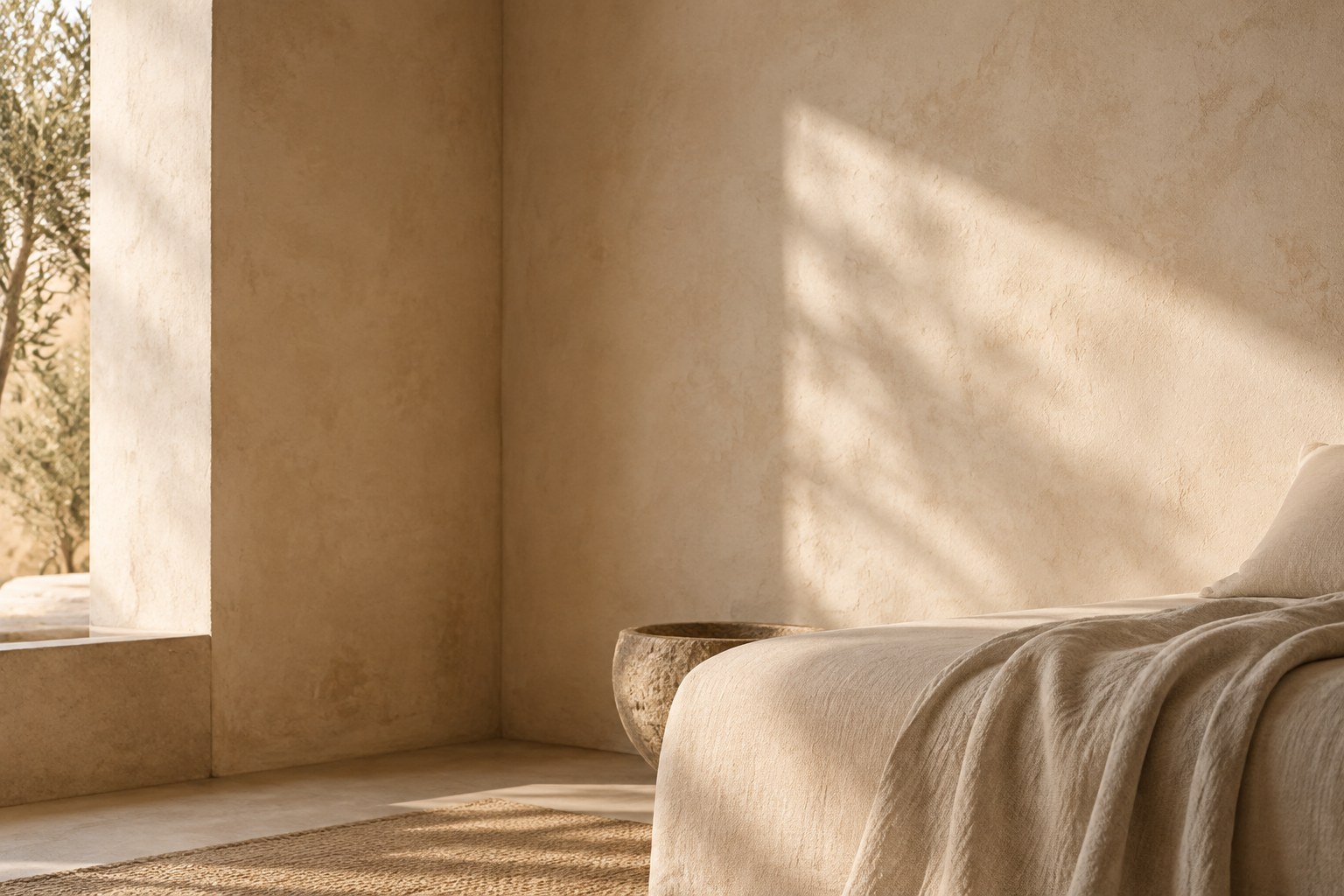
Hospitality design is evolving rapidly, driven by changing guest expectations and cultural shifts. Recent trends point toward quiet luxury, fluid multifunctional spaces, and wellness features integrated into rooms.
Key Points
- Quiet luxury is restraint as strategy: fewer, better materials, honest craftsmanship, and calm over spectacle. It reads as exclusive without performing it.
- Lobbies now have to work a full day: coffee bar in the morning, co-working at midday, lounge at night. Flexibility has to be designed in, not improvised.
- Wellness has moved from the spa into the guestroom: circadian lighting, air quality, and recovery-friendly details are becoming expected, not exceptional.
- Each trend below translates into concrete design moves, including how in-room technology and finish sequencing intersect with these expectations.
The Rise of Quiet Luxury
Quiet luxury emphasizes quality materials, refined finishes, and understated elegance. Rather than flashy opulence, it focuses on craftsmanship, comfort, and authenticity. Guests appreciate details like hand-stitched leather, natural stone, and soft lighting that feel exclusive without being ostentatious. This approach appeals to travelers seeking sophistication and calm.
What makes quiet luxury difficult to execute is that it has nowhere to hide. A loud design can mask a cheap detail with drama; a restrained one puts every joint, seam, and edge under scrutiny. The trend rewards designers who specify honestly: real stone instead of stone-look, solid timber where hands touch, textiles chosen for how they age rather than how they photograph on day one. Budget saved on ornament should be reinvested in the five materials guests actually touch.
Multifunctional Social Hubs
Traditional lobbies are being reimagined as social hubs that serve multiple purposes throughout the day. Morning coffee bars transform into co-working spaces, then into evening lounges. This adaptability allows hotels to serve more guests in the same footprint and encourages community. Movable furniture, flexible lighting, and integrated technology enable quick transitions.
The design discipline here is planning transitions, not just zones. A lobby that works at 9 a.m. and 9 p.m. needs lighting scenes that shift with it, furniture light enough to move but substantial enough to feel permanent, and acoustic treatment that lets a business call and a cocktail hour coexist. If the staff has to haul furniture every afternoon, the flexibility is theoretical. Build the changeover into the plan so it takes one person ten minutes, not three people an hour.
Wellness Comes to the Guestroom
Wellness amenities once confined to spas are moving into private rooms. In-room yoga mats, light therapy, meditation guides, and hydration stations are becoming standard. Even small additions such as adjustable circadian lighting or sound machines can enhance rest. Health-conscious travelers appreciate being able to maintain routines while on the road.
The guestroom version of wellness is less about equipment and more about environment. Blackout that actually blacks out. A thermostat a guest can understand in ten seconds. Materials that do not off-gas. A chair that invites sitting still. These moves cost less than a wellness suite and matter more to a tired traveler. When hotels add digital wellness layers, the design challenge shifts: how the technology lives in the room without turning it into a gadget showroom, a balance explored in this look at AI concierge systems in hospitality interiors.
Accessible Luxury for Families
Upscale experiences are no longer limited to adults-only resorts. Families are seeking premium accommodations with kid-friendly features like game nooks, multipurpose storage, and durable yet stylish finishes. Designers can create spaces that balance playfulness with sophistication.
Family-friendly luxury fails when it feels like a compromise. It works when the kid-proof choices are also the beautiful ones: performance fabrics in sophisticated weaves, rounded millwork edges that read as intentional detailing, storage that swallows toys whole. The test is simple: a couple without children should find the room just as refined as a family does.
Actionable Design Moves
Putting the trends together, here is how each one lands in a real specification:
| Trend | Design move | What the guest feels |
|---|---|---|
| Quiet luxury | Specify fewer materials at higher quality; invest where hands touch | Calm confidence, nothing shouting for attention |
| Multifunctional hubs | Movable furniture, layered lighting scenes, acoustic zoning | A space that always feels right for the hour |
| In-room wellness | True blackout, intuitive controls, air quality, one real moment of stillness | Genuine rest, not a wellness gimmick |
| Family luxury | Performance textiles, rounded edges, storage that disappears clutter | Ease, for parents and kids alike |
Execution matters as much as intent. Quiet-luxury palettes with layered, natural materials are exactly the kind of finish package where late decisions cascade, so the sequencing discipline covered in finish decisions and trade dependencies is worth building into the project plan early.
Hospitality Questions, Answered
Is quiet luxury just minimalism with a bigger budget?
No. Minimalism is an aesthetic of reduction; quiet luxury is an aesthetic of material honesty. A quiet-luxury room can be layered and rich. The distinction is where the money goes: into craft and material truth rather than statement pieces. It is actually harder to value-engineer, because every substitution is visible.
How do you keep a multifunctional lobby from feeling like a conference center?
Material warmth and residential cues. Upholstered seating instead of task chairs, rugs that define zones, lighting that dims to evening mode. The co-working function should read as "a beautiful room where you can also work," never as an office that happens to serve coffee.
Do guests actually use in-room wellness features?
The environmental ones, yes: blackout, quiet, air quality, good water, a genuinely comfortable chair. The gadget ones see mixed use. Design for the passive wellness every guest gets automatically, and treat the active features as a bonus for the guests who want them.
Ready to work with a studio that moves at your pace?
Get In Touch